Biometric Feedback Loops Enhancing Personalization in Bonus Distribution for Remote Entertainment Users
Greta Peters · May 20, 2026
Biometric Feedback Loops Enhancing Personalization in Bonus Distribution for Remote Entertainment Users
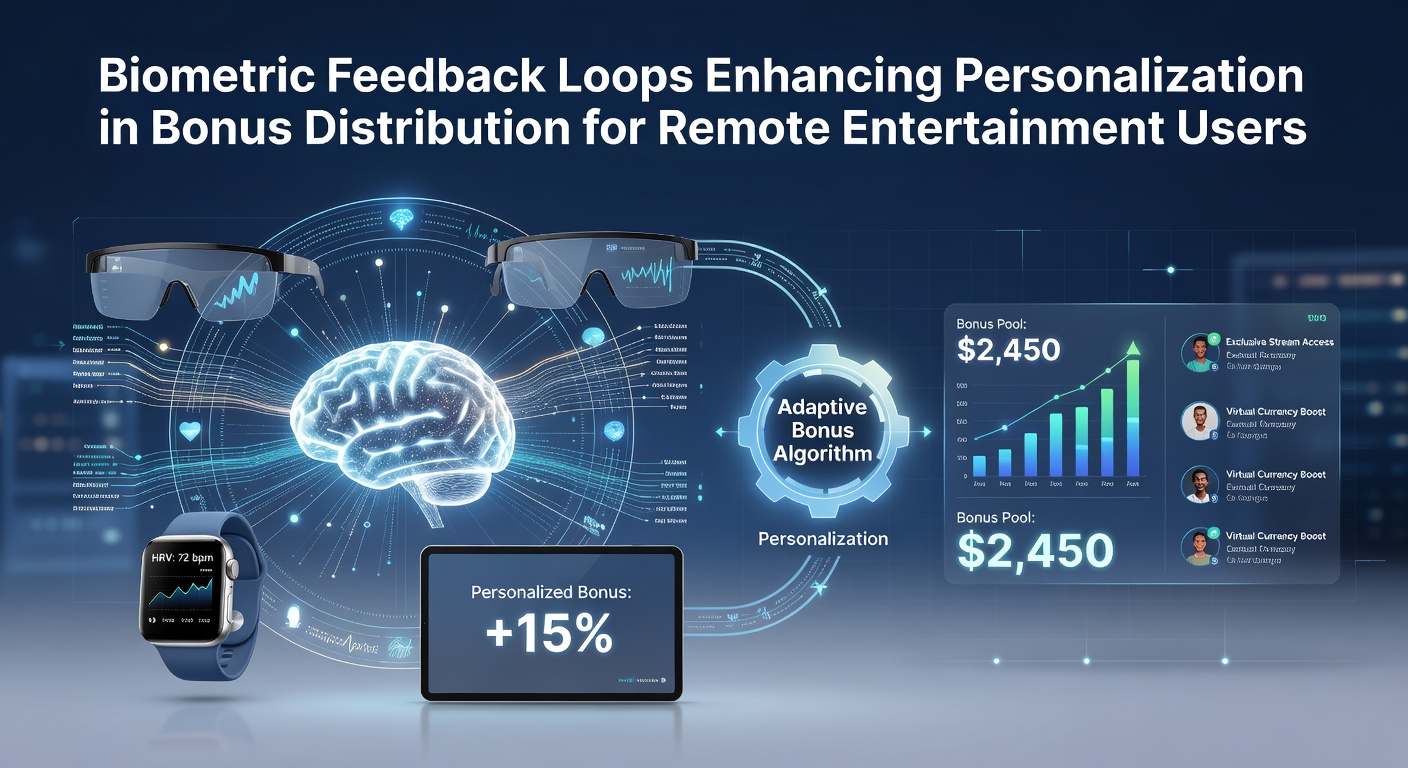
Biometric feedback loops collect physiological data such as heart rate variability, skin conductance, adn eye movement patterns through device cameras and connected wearables, then feed that information back into entertainment platforms to adjust user experiences in real time. Remote entertainment users encounter these systems when streaming interactive content or participating in digital gaming environments where platforms monitor engagement signals to refine reward structures. Researchers at institutions including the University of Toronto have documented how continuous data streams allow algorithms to identify moments of heightened attention or waning interest, creating closed-loop adjustments that tailor bonus allocations without direct user input.
Core Mechanisms of Data Collection and Processing
Platforms integrate biometric sensors with standard user interfaces so that heart rate monitors on smartwatches or facial recognition through webcams transmit readings to central servers every few seconds. These readings combine with behavioral metrics such as click frequency and session duration to build individualized profiles that update dynamically. Data from the National Institute of Standards and Technology shows that accuracy rates for emotion detection algorithms reached 87 percent in controlled tests conducted through 2025, allowing systems to distinguish between excitement peaks and frustration signals with increasing precision. The loops close when the platform responds by modifying reward timing or value, for instance by delivering bonus credits during detected high-engagement windows rather than at fixed intervals.
Personalization Strategies in Bonus Allocation
Bonus distribution becomes more granular when feedback loops map physiological responses to specific content triggers, such as certain game levels or narrative moments in remote entertainment sessions. One documented implementation routes elevated skin conductance readings to trigger micro-bonuses that appear as instant in-app rewards, while lower arousal states prompt larger deferred incentives designed to re-engage users. Observers note that this approach relies on machine learning models trained on anonymized datasets collected across thousands of sessions, enabling predictions of optimal reward types for each user segment. In May 2026 several major platforms began rolling out updated protocols that incorporate multi-modal biometric inputs, including voice stress analysis, to further refine these personalization rules across European and North American markets.
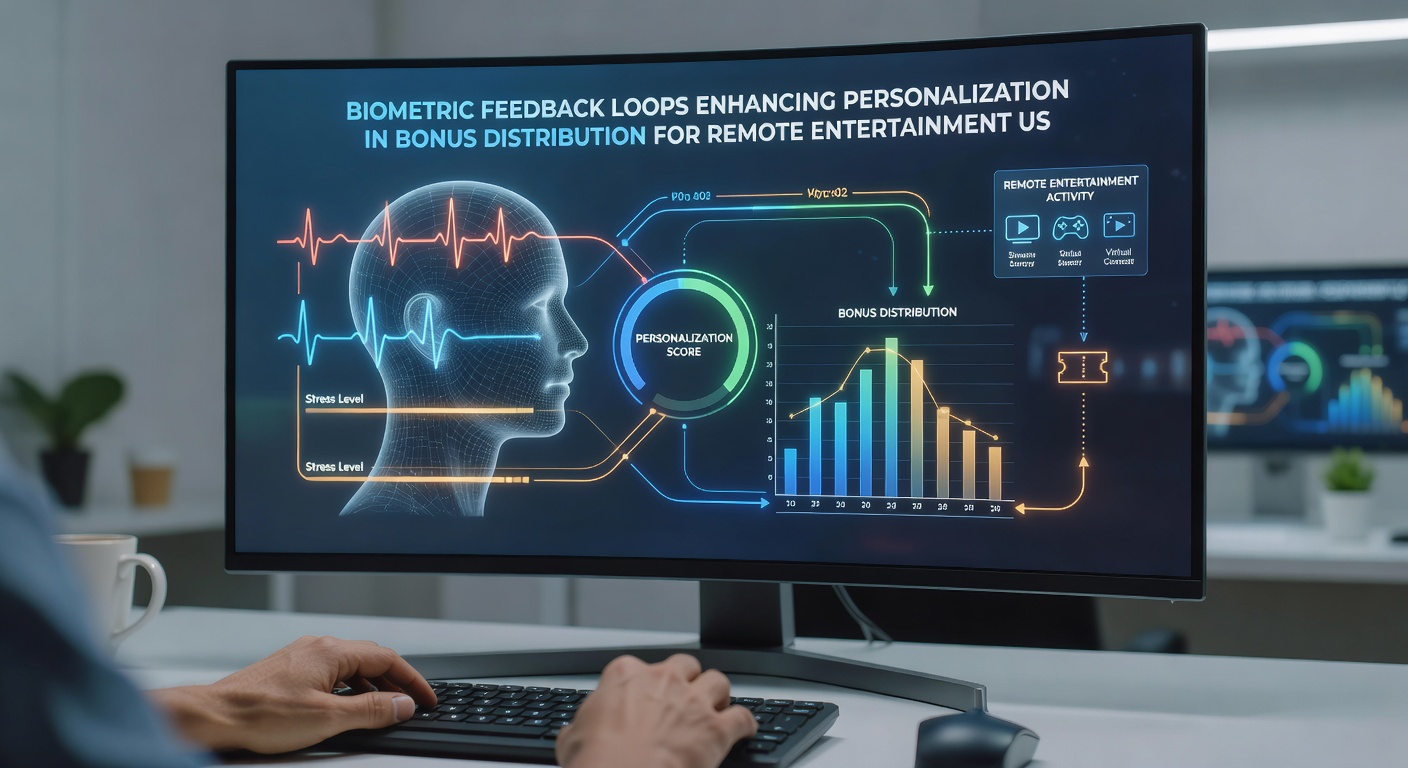
Regulatory frameworks in Canada and Australia require explicit consent mechanisms before biometric data enters these loops, with users able to toggle sensor access through account settings. Industry reports from the Interactive Games and Entertainment Association indicate that platforms adopting these standards maintained compliance while still achieving measurable lifts in session metrics, because the systems operate on aggregated pattern recognition rather than individual identity storage. The feedback process continues throughout each session so that bonus offers evolve based on the latest physiological readings, creating a continuous rather than one-time personalization cycle.
Integration Challenges and Technical Standards
Latency remains a primary technical hurdle because biometric data must travel from user devices to processing servers and return as adjusted bonus parameters within sub-second windows to feel seamless. Engineers address this through edge computing nodes that perform initial filtering locally before transmitting summarized features to central models. A joint study released by researchers at the Technical University of Denmark and the Australian Institute of Sport found that hybrid edge-cloud architectures reduced average response times by 62 percent compared with fully centralized processing. Security protocols encrypt raw biometric streams at the device level, and platforms delete identifiable elements after profile generation to limit long-term data retention.
Current Developments as of May 2026
By May 2026 several entertainment providers had begun testing biometric loops that incorporate galvanic skin response alongside traditional engagement data to differentiate between casual browsing and focused participation. These tests occur under oversight from bodies such as the Canadian Radio-television and Telecommunications Commission, which evaluates user notification practices. The resulting bonus systems display tailored offers that align reward magnitude with detected interest levels, for example presenting larger virtual currency packages when users show sustained positive physiological markers. Cross-platform data sharing agreements allow some services to carry anonymized preference profiles between entertainment applications, provided users opt in through unified consent dashboards.
Conclusion
Biometric feedback loops continue to shape how remote entertainment platforms structure bonus distribution by linking physiological signals directly to reward timing and scale. As technical standards mature and regulatory clarity increases across regions, the systems deliver increasingly precise personalization while operating within established consent and data protection requirements. The approach relies on established sensor technologies and machine learning techniques that process data in real time, producing measurable adjustments to user experiences documented in multiple independent studies.