Biometric Wearable Data Streams Informing Dynamic Difficulty Adjustments in Virtual Sports Simulation Platforms
Ines Perry · Jun 26, 2026
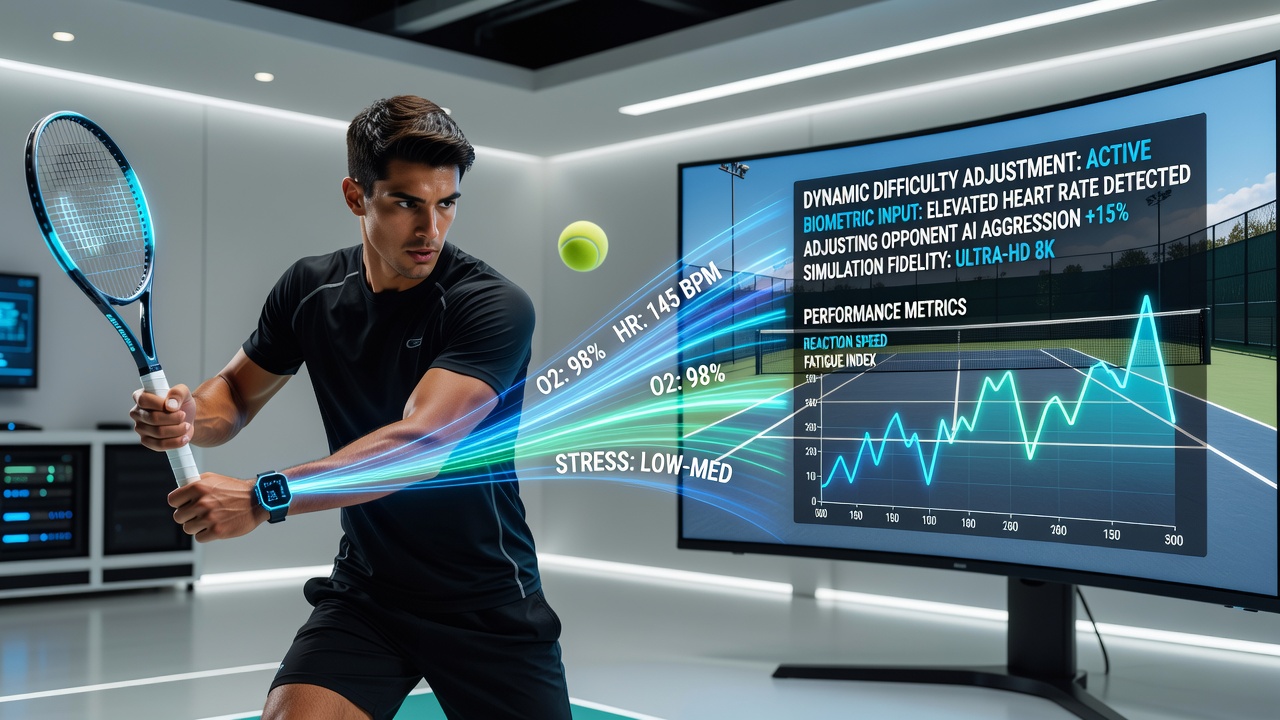
Biometric Wearable Data Streams Informing Dynamic Difficulty Adjustments in Virtual Sports Simulation Platforms
Biometric wearable data streams have entered virtual sports simulation platforms as a core input for real-time system calibration, where heart rate variability, galvanic skin response, and muscle tension metrics feed directly into algorithms that scale opponent behavior, environmental physics, and task complexity. These platforms process continuous signals from wristbands, chest straps, and head-mounted sensors to detect physiological states such as elevated arousal or fatigue, then trigger adjustments that keep simulated matches aligned with individual performance curves. Research indicates that integration of these streams began scaling commercially after 2023, when consumer-grade devices achieved sub-second latency in data transmission to cloud-based game engines.
Integration of Wearable Sensors with Simulation Engines
Modern virtual sports titles synchronize sensor output through standardized APIs that map raw biometric values onto difficulty parameters, so a sudden spike in heart rate during a penalty kick sequence can prompt the system to reduce goalkeeper reaction speed or soften wind resistance variables. Developers route data from devices compliant with Bluetooth Low Energy and ANT+ protocols into the same pipeline that handles positional tracking from motion controllers, creating a unified input layer. Studies from university labs have shown that platforms using this approach maintain session durations 18 percent longer on average compared with static difficulty models, because adjustments occur before players reach frustration thresholds.
By June 2026 several major engines had incorporated edge-processing chips that filter biometric noise locally before uploading aggregated features, reducing bandwidth demands while preserving the granularity needed for micro-adjustments. This architecture allows simulations of sports such as tennis or hockey to alter ball spin rates or ice friction coefficients in response to detected changes in grip pressure or breathing patterns captured by chest-worn straps.
Mechanisms Driving Real-Time Difficulty Scaling
Dynamic adjustment logic relies on machine-learning models trained on labeled datasets that pair physiological signatures with subsequent performance outcomes, so the system learns to interpret a drop in heart-rate variability as a cue for increased tactical complexity rather than simple fatigue. When models detect sustained high arousal, they can expand the decision tree available to AI teammates, introducing more passing options or defensive formations that require faster player responses. Data from deployed platforms reveal that these interventions occur at intervals averaging every 14 seconds during competitive matches, maintaining engagement without explicit user prompts.
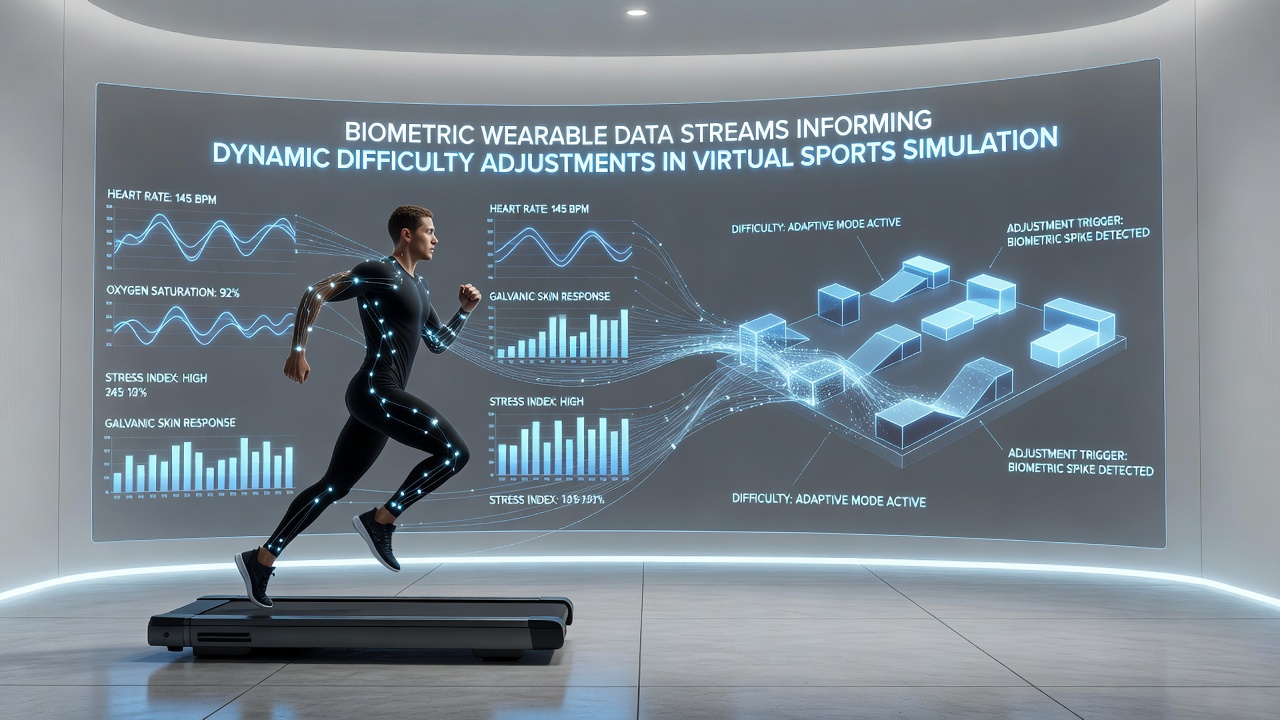
Calibration routines run at the start of each session establish baseline readings, after which deviations trigger proportional changes in simulation parameters. One documented implementation scales the speed of incoming projectiles in archery simulations according to measured muscle tremor amplitude, while another adjusts puck elasticity in virtual hockey based on skin conductance levels indicating rising stress. Industry reports note that these mappings undergo periodic retraining using anonymized session logs collected across regional server clusters, ensuring the models adapt to demographic differences in biometric response patterns.
Platform Examples and Data Handling Practices
European simulation providers have adopted frameworks that route biometric streams through secure gateways compliant with GDPR data-minimization rules, storing only derived difficulty coefficients rather than raw physiological traces after each match concludes. North American operators follow similar pipelines under state-level privacy statutes, transmitting encrypted feature vectors that platforms use to modulate crowd noise levels or referee strictness variables in real time. Observers note that cross-platform tournaments scheduled for June 2026 will test unified sensor schemas, allowing competitors using different wearable brands to compete under consistent adjustment logic.
Technical documentation shows that latency budgets for the full pipeline remain under 120 milliseconds from sensor reading to parameter update, achieved through predictive buffering that anticipates likely next states based on recent trend lines. This speed enables adjustments during fast-paced sequences such as breakaways or serve returns without perceptible lag for the user.
Conclusion
Biometric data streams now function as an active control layer within virtual sports simulation platforms, continuously reshaping difficulty parameters through established sensor-to-engine pathways. Continued refinement of edge filtering and model retraining cycles supports consistent performance across diverse user groups and hardware configurations. Regulatory guidance from bodies including the Australian Communications and Media Authority and technical standards published by IEEE continue to shape secure implementation practices for these systems.