Charting Data Synchronization Patterns Between Payment Gateways and Live Dealer Interfaces Across Regional Mobile Networks
Carlo Baumann · Aug 23, 2026
Charting Data Synchronization Patterns Between Payment Gateways and Live Dealer Interfaces Across Regional Mobile Networks
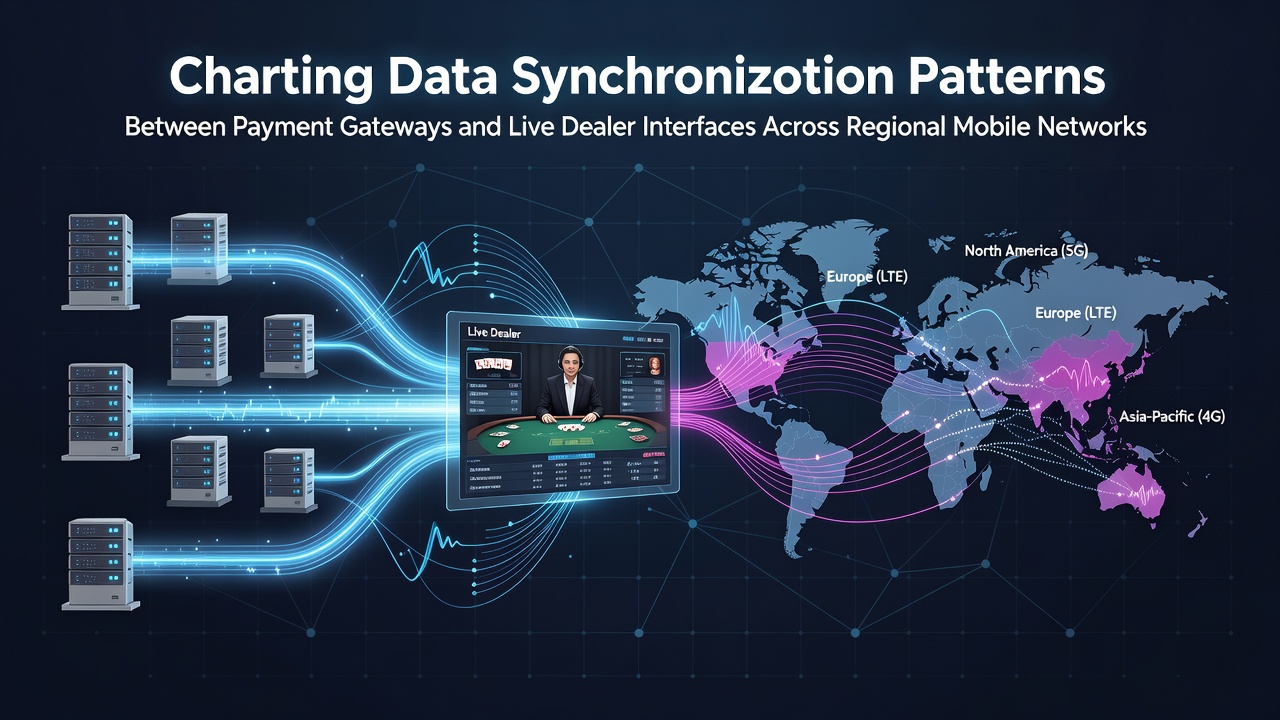
Payment gateways and live dealer interfaces rely on precise data synchronization to maintain seamless transactions during real-time gaming sessions, and observers note that regional mobile network variations create distinct patterns in how this alignment occurs. Data packets carrying bet placements, balance updates, and dealer action confirmations must travel between gateway APIs and streaming platforms without measurable lag, while mobile carriers in Asia, Europe, and the Americas each impose unique constraints on bandwidth allocation and signal stability.
Core Synchronization Mechanisms
Live dealer platforms transmit continuous video feeds alongside game state data, and payment gateways respond with authorization tokens that confirm funds availability within milliseconds. Researchers have mapped these exchanges across 4G and 5G environments, finding that synchronization typically follows a request-response cycle where mobile edge computing nodes cache transaction states to reduce round-trip times. In dense urban zones with high 5G adoption, the pattern favors sub-100-millisecond confirmations because network slicing prioritizes low-latency traffic for entertainment applications.
Regional differences emerge clearly when comparing carrier policies. European operators often apply strict quality-of-service tiers that separate gaming traffic from general data, whereas Southeast Asian networks integrate payment verification directly into core routing tables to handle higher concurrent user volumes during peak evening hours.
Regional Mobile Network Influences
August 2026 brought expanded 5G standalone deployments in several markets, and figures from industry monitoring groups show that synchronization reliability improved by measurable margins in those areas. Mobile networks in Japan and South Korea demonstrated the tightest alignment between gateway responses and dealer interface updates, because their infrastructure already supported network function virtualization at scale. In contrast, Latin American carriers operating mixed 4G and emerging 5G grids recorded periodic desync events tied to handoff protocols between cell towers.
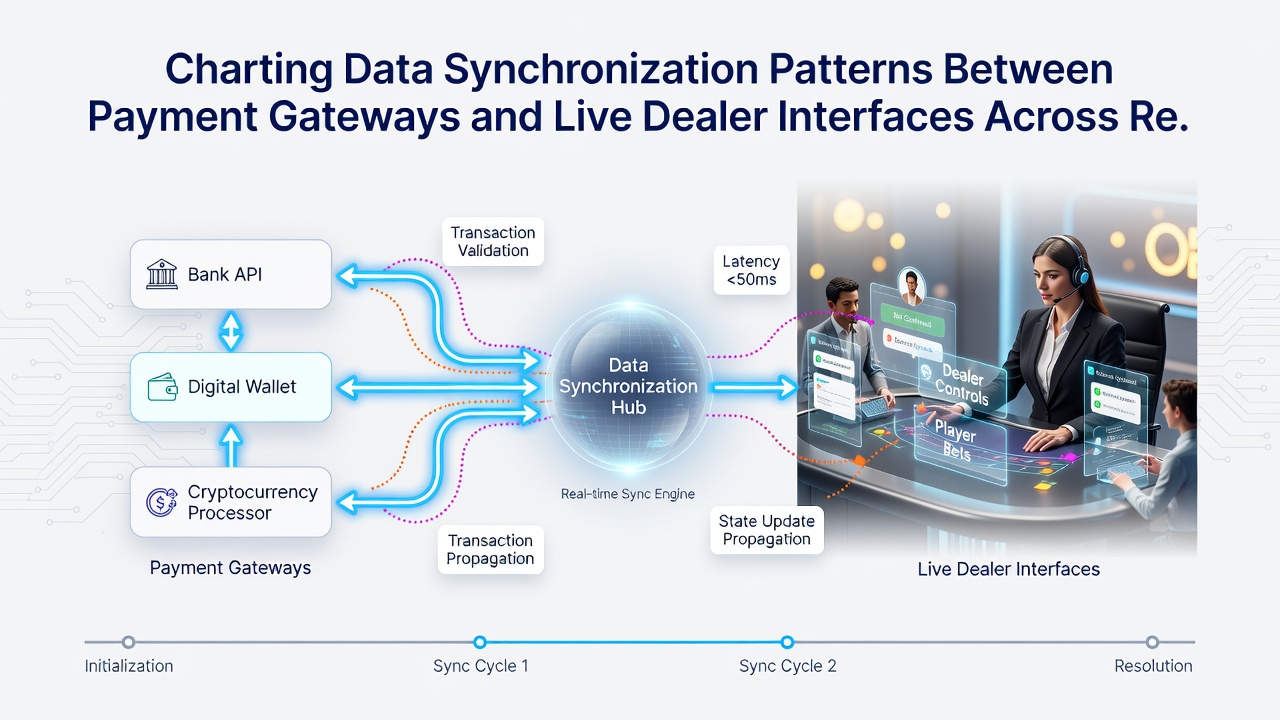
Payment gateway providers adjust their timeout thresholds according to these regional baselines. One documented pattern involves extending the authorization window by 50 to 80 milliseconds when routing through networks with documented jitter above 30 milliseconds, preserving session continuity without triggering rollback procedures.
Protocol and API Integration Patterns
Standardized interfaces such as RESTful endpoints combined with WebSocket channels handle the bidirectional flow, and analysts observe that successful synchronization depends on header compression techniques that shrink metadata overhead on constrained mobile links. When a player places a wager, the gateway issues a signed payload that the dealer interface validates against its current table state before rendering the outcome. Failures occur most often during network congestion events, prompting automatic fallback to cached balance snapshots stored at regional edge servers.
Studies conducted by telecommunications research bodies indicate that packet loss rates above 0.5 percent force gateways to implement redundant confirmation loops, adding overhead that regional operators attempt to offset through dedicated bearer channels. In North American deployments, carriers have tested prioritized slices for financial transaction traffic that runs parallel to the video stream, yielding more stable synchronization windows compared with shared infrastructure models.
Security and Compliance Considerations
Encryption layers wrap each synchronization message, and regulatory frameworks in multiple jurisdictions require audit trails that timestamp every balance change relative to dealer actions. Data protection standards enforced by bodies such as those referenced in GSMA technical documentation emphasize end-to-end integrity checks that prevent replay attacks during mobile handoffs. Observers note that cross-border sessions introduce additional verification steps when payment gateways operate under different licensing regimes than the live dealer platform.
Token rotation schedules and mutual TLS handshakes form another recurring pattern, with gateways refreshing credentials every few minutes to limit exposure windows. Regional mobile operators that support these protocols report fewer interrupted sessions during extended play periods.
Performance Metrics and Observed Trends
Telemetry collected from distributed monitoring nodes reveals average synchronization success rates exceeding 99.2 percent on optimized 5G paths, while mixed-generation networks hover near 97.8 percent. Latency histograms compiled across three continents show that the 95th percentile response time remains under 250 milliseconds when edge caching is active, yet spikes occur during major sporting events that drive concurrent usage spikes. Payment gateway logs indicate that retry mechanisms activate most frequently on networks lacking explicit QoS markings for real-time entertainment traffic.
Academic analyses from institutions tracking mobile data flows, including work referenced through IEEE publications on wireless systems, document how adaptive buffering strategies mitigate desynchronization by temporarily storing dealer state updates at the client device until the gateway confirms settlement. These approaches prove especially effective in areas where signal strength fluctuates rapidly due to mobility.
Conclusion
Mapping these synchronization patterns provides a factual basis for understanding how payment gateways and live dealer interfaces maintain operational coherence across varied mobile environments. Continued infrastructure upgrades and protocol refinements continue to shape the timing and reliability of these critical data exchanges in measurable ways.