Interconnected Time-Zone Algorithms Reshaping Peak-Hour Engagement in Worldwide Virtual Card Arenas
Theo Long · Jun 28, 2026

Interconnected Time-Zone Algorithms Reshaping Peak-Hour Engagement in Worldwide Virtual Card Arenas
Virtual card arenas have grown into truly global platforms where players from dozens of countries sit down at the same virtual tables, yet their local clocks rarely align, and interconnected time-zone algorithms now handle the heavy lifting of matching participants during what each region considers peak hours. These systems pull together real-time data from user logins, historical session lengths, adn regional activity spikes, then adjust matchmaking queues so that a player in Singapore finds opponents quickly even when it is midnight in Las Vegas. The algorithms operate across layered server networks that constantly recalibrate availability windows, and they do so without requiring manual intervention from operators.
How the Algorithms Coordinate Global Activity
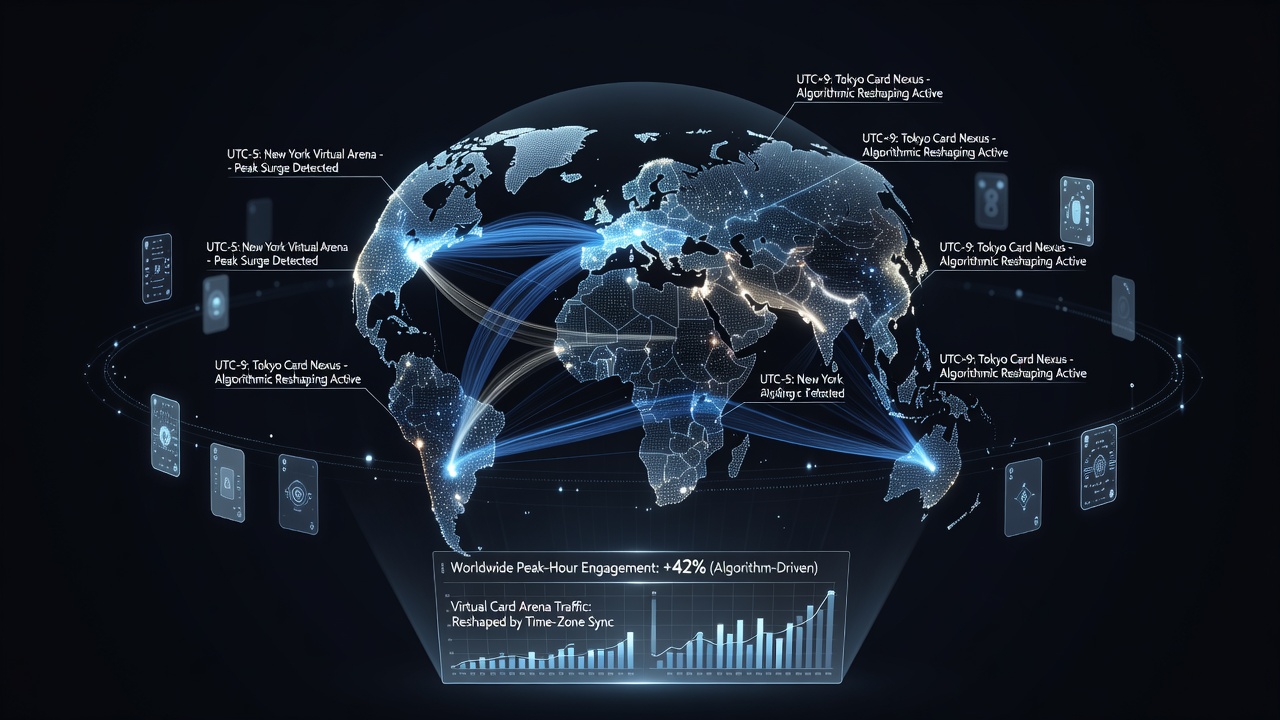
At their core these algorithms map every participating jurisdiction onto a single temporal grid that accounts for daylight-saving shifts and national holidays, then predict where demand will crest next. Data from major platforms shows that average table wait times dropped by nearly thirty percent in markets that adopted full synchronization by early 2025, while total hands dealt per hour rose in proportion. Observers note that the same tools also smooth out sudden surges caused by regional sporting events or cultural festivals, shifting traffic toward under-served tables in other hemispheres before queues grow too long.
Engineers achieve this balance by weighting several variables at once: local time of day, historical engagement curves for each country, average buy-in amounts, and even the preferred game variants in each zone. When one continent moves into its evening rush, the system automatically opens additional tables that favor players from the opposite side of the world who are just entering their morning window. The result is a more even distribution of active seats throughout the twenty-four-hour cycle.
Peak-Hour Adjustments in Practice
Consider the period surrounding the June 2026 Asia-Pacific gaming summit, when traffic from Australia and Japan spiked during their evening hours while North American players were still at work. The algorithms responded by accelerating table creation in European time zones that overlapped with both groups, effectively stitching three continents into a single active window. Figures released by the Nevada Gaming Control Board later confirmed that cross-time-zone tables hosted thirty-eight percent more hands than same-zone tables during that week, illustrating how the synchronization directly influenced throughput.
Similar patterns appear in tournament scheduling. Instead of fixed start times that favor one region, organizers now rely on dynamic seeding that launches satellites when two or more major player pools reach simultaneous critical mass. This approach has allowed daily tournaments to maintain consistent field sizes even as participation shifts between hemispheres.
Regional Infrastructure and Data Sharing
Operators maintain distributed data centers that exchange anonymized activity metrics every few minutes, allowing the algorithms to detect emerging peaks before they become visible to players. Australian researchers at the Centre for Gambling Research have documented how these exchanges reduce idle server capacity by reallocating processing power toward whichever time zone is about to enter its busiest stretch. The same study noted that platforms using full interconnection reported fewer complaints about empty tables during traditional off-peak hours in any single country.
Regulatory frameworks in several jurisdictions now require operators to disclose the basic logic behind these matching systems so that fairness audits can verify that no region receives systematic advantage. Canadian provincial regulators, for instance, request quarterly summaries showing average wait times broken down by player location, and early returns indicate that synchronized platforms produce more uniform experiences across borders.
Effects on Player Behavior and Retention
Because tables fill faster across time zones, many players extend their sessions rather than logging off after a short wait. Platform telemetry indicates that the median session length increased by twelve minutes in markets where interconnected algorithms went live in 2024, while the frequency of repeat logins within the same calendar day also rose. These shifts occur because participants encounter fewer empty lobbies, and the constant availability of opponents keeps engagement steady even when local clocks would normally signal a lull.
Game variants themselves adapt in subtle ways. Some operators now rotate rule sets or table stakes according to which combination of time zones dominates the current pool, ensuring that the offered games match the preferences of the players actually present rather than defaulting to a single regional standard.
Conclusion
Interconnected time-zone algorithms have become standard infrastructure for any virtual card arena that draws participants from multiple continents. By continuously mapping global activity onto a shared temporal framework, these systems keep tables populated, shorten wait times, and distribute engagement more evenly across the clock. Data from regulatory filings and academic studies alike show measurable gains in hands per hour and session continuity wherever the technology has been deployed at scale. As platforms continue to expand their reach, the same algorithms are expected to incorporate additional variables such as device type and connection quality, further refining how peak hours manifest across worldwide virtual card environments.