17 Jul 2026
Intercontinental Data Routing Pathways Affecting Latency in Real-Time Multiplayer Table Game Interactions
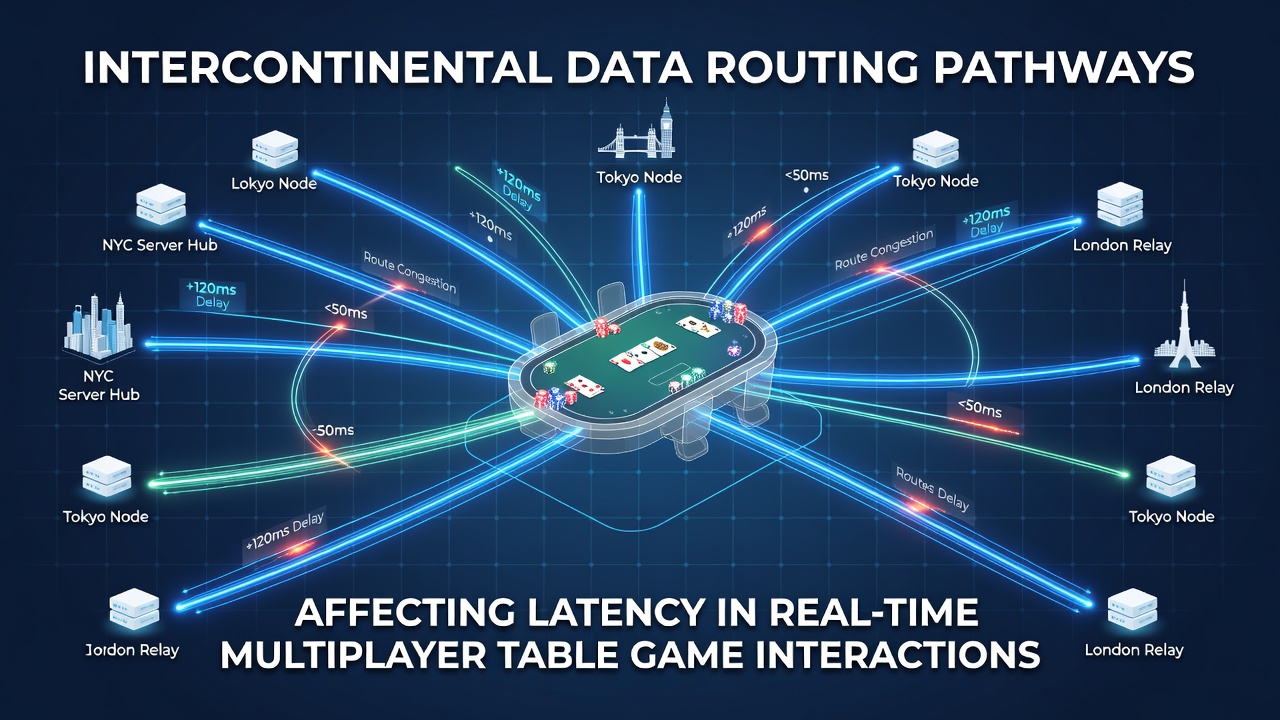
Data packets traveling between continents follow specific routes that determine how quickly information reaches players engaged in real-time multiplayer table games such as poker, blackjack, and roulette, and these pathways rely on submarine fiber optic cables, terrestrial networks, and internet exchange points where traffic gets handed off between providers.
Research from network monitoring organizations indicates that the physical distance alone does not dictate latency because routing decisions made by border gateway protocol algorithms often send data through indirect paths that add milliseconds to each round trip, and observers note this becomes particularly noticeable during peak hours when congestion forces packets onto longer routes across the Atlantic or Pacific.
Core Components of Intercontinental Routing
Undersea cables form the backbone of these connections, and major systems such as those linking North America to Europe or Asia to Australia carry the bulk of gaming traffic while peering agreements at points like those in Frankfurt, Singapore, and Ashburn Virginia determine where data switches carriers; data shows that when a route passes through multiple exchange points the cumulative delay increases because each handoff introduces processing time even if individual segments remain efficient.
Those who study internet infrastructure have observed that some providers optimize paths for gaming traffic through dedicated routing policies, yet others prioritize general internet usage which can divert game packets onto less direct routes during periods of high demand, and this variation explains why players in one region experience consistent sub-50 millisecond pings while others in similar geographic positions face spikes above 120 milliseconds.
Latency Effects in Table Game Sessions
Real-time table game interactions require synchronized updates between multiple clients and central servers so that card deals, bet placements, and dealer actions register simultaneously for all participants, and when intercontinental pathways introduce variable latency some players receive information fractions of a second later than others which disrupts the shared game state and can lead to desynchronization events where actions appear out of sequence.
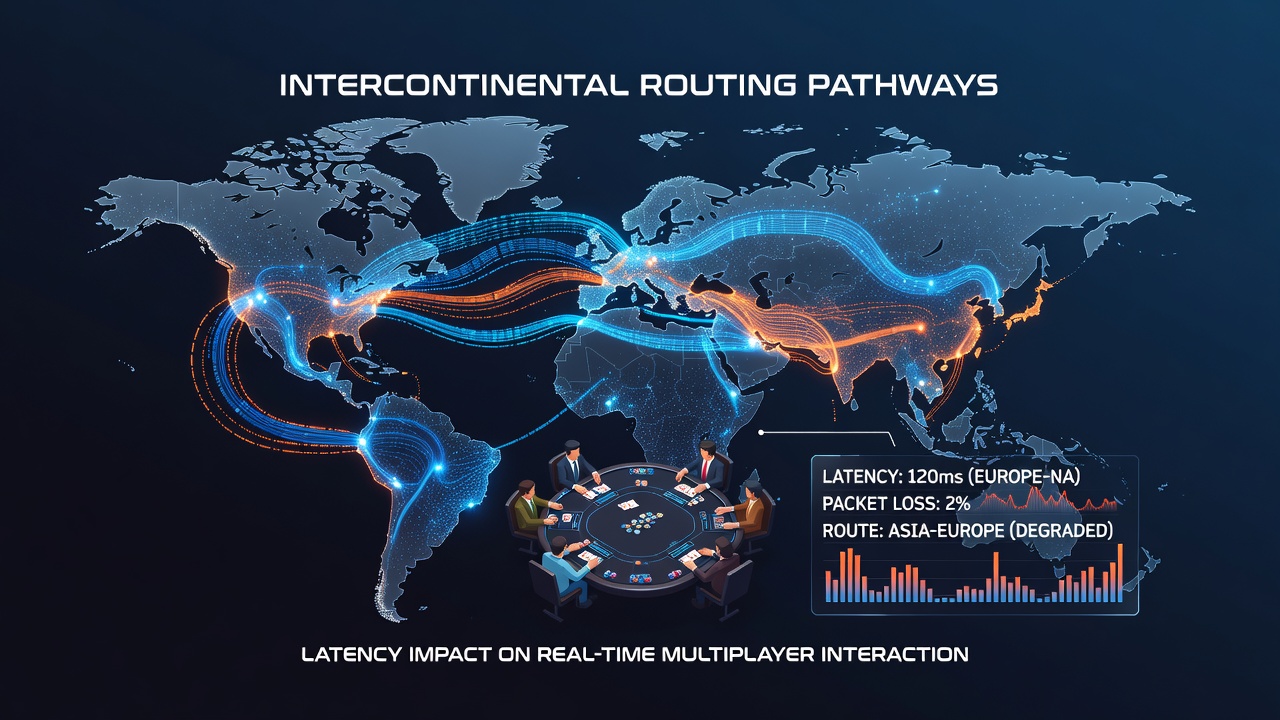
Figures from traffic analysis tools reveal that routes crossing the Atlantic via certain cable systems maintain lower jitter compared with Pacific routes that traverse additional intermediate nodes, and this difference affects games with rapid decision windows such as live dealer blackjack where a 30 millisecond delay can shift the perceived timing of a hand.
Regional Variations and Infrastructure Developments
Players connecting from Australia to European servers often encounter routes that pass through Asian hubs before reaching the destination, and measurements collected during July 2026 show average round-trip times ranging from 180 to 250 milliseconds depending on the specific cable system utilized, whereas direct trans-Pacific options remain limited for certain provider combinations. Regulatory bodies including the Australian Communications and Media Authority have documented these patterns in public reports on international bandwidth allocation.
North American connections to Asian game servers frequently benefit from newer cable deployments completed in recent years, yet some legacy routing configurations still direct traffic through North American exchange points first which adds unnecessary distance, and industry reports from the Entertainment Software Association highlight how these choices influence the stability of multiplayer sessions across different operator platforms.
Mitigation Approaches Used by Operators
Game providers deploy regional server clusters and content delivery techniques to reduce the impact of long-haul routing, and some implement traffic shaping that prioritizes game packets over other data types while others establish direct peering relationships with major carriers to secure shorter paths, and these strategies have been shown to cut effective latency by 20 to 40 percent according to internal performance metrics shared in technical forums.
Studies published by IEEE researchers on network optimization demonstrate that dynamic route selection based on real-time monitoring can reroute traffic away from congested segments within seconds, although such systems require substantial investment in monitoring infrastructure and carrier partnerships that not all operators maintain at equal levels.
Conclusion
Intercontinental data routing pathways continue to shape the latency profile of real-time multiplayer table game interactions through a combination of physical infrastructure, peering arrangements, and algorithmic decisions that determine packet flow, and ongoing cable deployments along with refined routing policies offer measurable improvements in consistency for players across different regions. Data from multiple monitoring sources confirms that these factors remain central to session quality as global participation in distributed table games expands.