Mapping Interdependent Reward Structures in Hybrid Entertainment Platforms and Their Effects on Decision-Making Patterns During Extended Mobile Sessions
Carlo Baumann · Aug 19, 2026
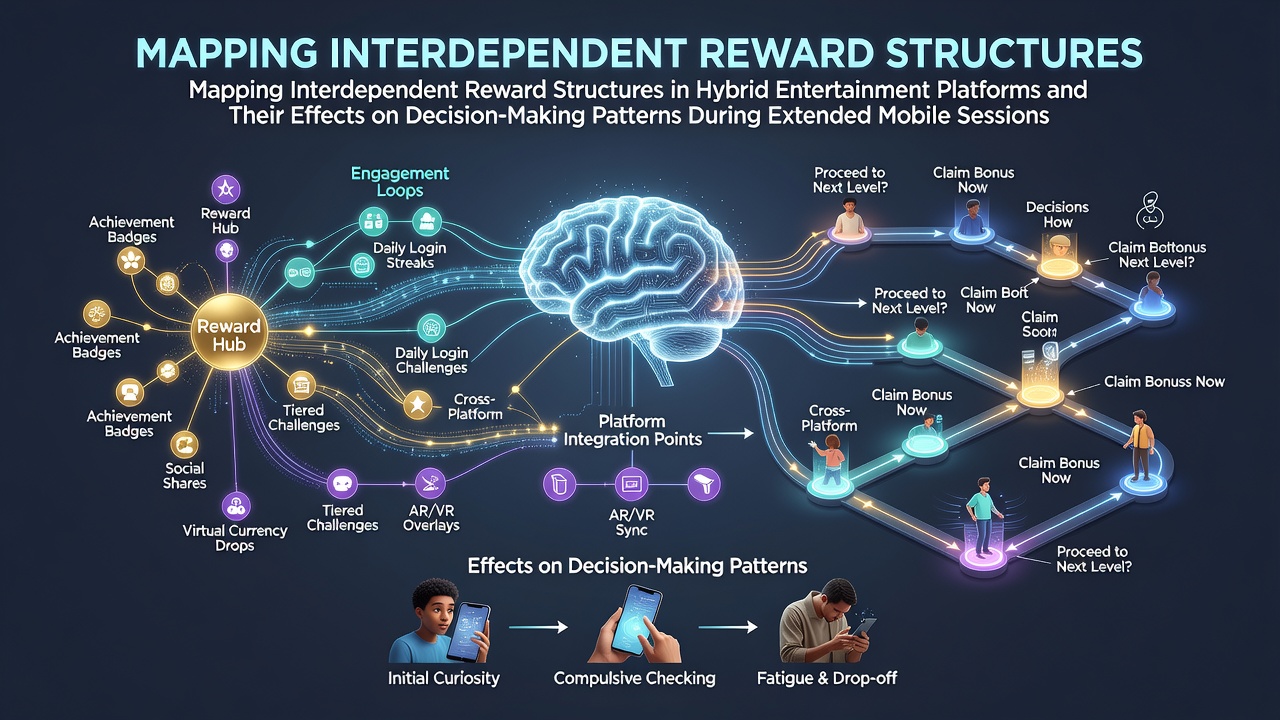
Mapping Interdependent Reward Structures in Hybrid Entertainment Platforms and Their Effects on Decision-Making Patterns During Extended Mobile Sessions
Hybrid entertainment platforms combine elements of gaming, social interaction, and monetized features into single mobile applications, and researchers track how reward structures within these systems depend on each other to shape user choices. Data from platform analytics shows that rewards earned in one module, such as virtual currency from mini-games, often unlock bonuses in another area like live events or progression systems, creating chains that extend session durations. Studies from academic institutions indicate that these linkages influence decision points where users choose between continuing a current activity or switching to a new feature that promises immediate returns.
Core Components of Interdependent Reward Mapping
Platform developers design reward maps by connecting progression trees so that achievements in social features feed directly into monetized sections, and vice versa. Observers note that a user completing a daily challenge in one segment receives tokens that apply to slot-style mechanics elsewhere, while those same tokens may trigger multipliers in competitive leaderboards. According to a 2025 report from the European Commission on digital platform economics, such cross-module dependencies appear in over 60 percent of top-grossing hybrid apps tracked across member states. The mapping process relies on data pipelines that update reward values in real time based on aggregate user behavior rather than individual play alone.
Those who analyze server logs find that reward thresholds adjust dynamically when session length exceeds average benchmarks, prompting offers that require continued engagement to claim. This adjustment occurs through algorithms that reference prior session data, and the result is a feedback loop where early rewards encourage longer participation to access later ones. Figures released by Stanford University's Digital Economy Lab in August 2026 revealed that sessions lasting beyond 45 minutes showed a 34 percent increase in cross-feature reward redemptions compared with shorter visits.
Observed Shifts in Decision-Making During Prolonged Use
Extended mobile sessions produce measurable changes in how users evaluate options once reward interdependencies become active. Behavioral tracking data indicates that players reach decision nodes more frequently after the first 30 minutes, and at those points the presence of linked rewards correlates with higher rates of continued play over exit. Researchers at the University of Melbourne documented similar patterns in a multi-platform study, noting that users facing simultaneous offers from interconnected systems selected continuation options 28 percent more often than when rewards remained isolated.
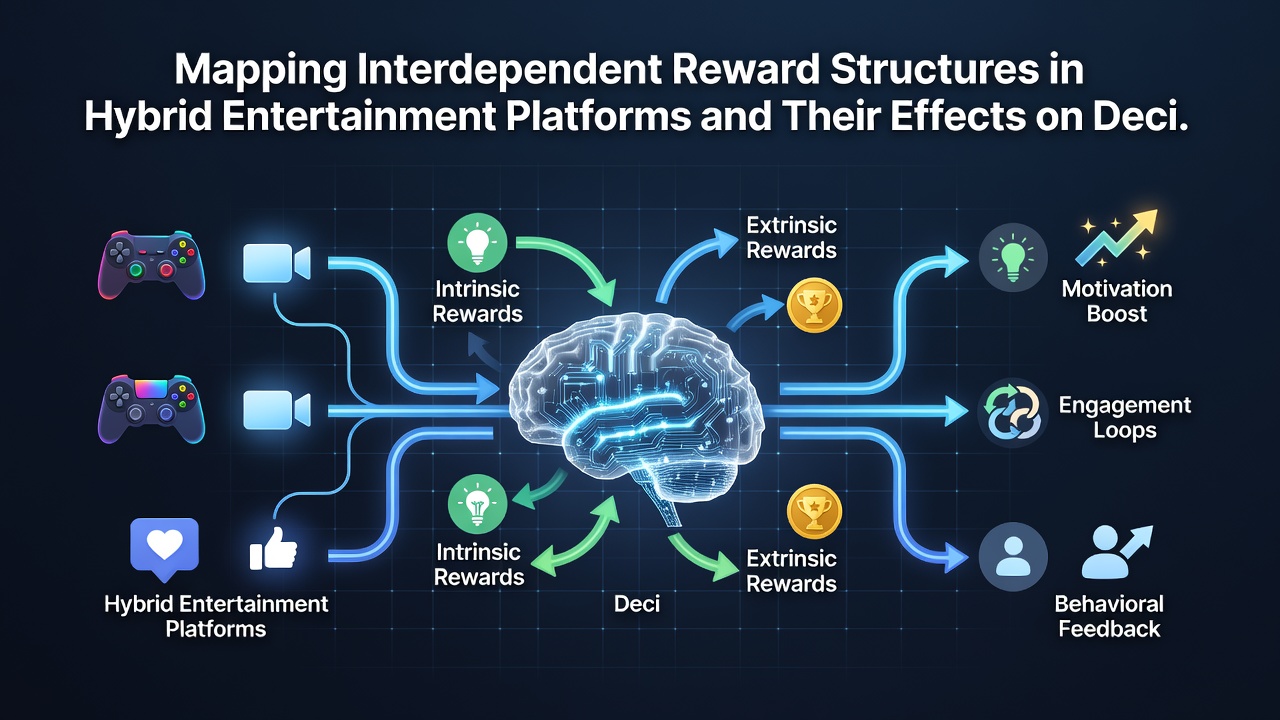
The timing of reward availability further directs choices toward features that promise compounding returns. Platform telemetry shows that when a bonus earned in a social module becomes usable in a progression module within the same session, users tend to prioritize that path over alternatives that offer standalone payouts. Data collected by the Australian Competition and Consumer Commission on digital entertainment services highlights that these timing alignments appear most often in applications released after 2024, coinciding with wider adoption of unified user accounts across entertainment verticals.
Technical Implementation of Reward Interconnections
Engineers implement the mapping through centralized ledgers that assign unique identifiers to each reward type and define rules for conversion between them. These rules operate on conditional logic so that one reward type remains inert until another condition, such as level completion or time spent, is met. Observers of backend architecture report that synchronization occurs every few seconds during active sessions, allowing the system to surface new options based on the current reward balance. This setup reduces friction between modules and keeps users within a single application rather than prompting navigation to separate titles.
Case examples from industry white papers describe platforms where reward mapping extends across seasonal events, meaning progress from one month carries forward and influences availability in the next. The result is a layered structure in which short-term decisions feed into longer-term planning, and users adjust their immediate choices accordingly. Platform operators publish aggregated statistics that confirm these patterns without disclosing proprietary conversion rates or exact algorithmic weights.
Conclusion
Mapping interdependent reward structures reveals consistent patterns in how hybrid entertainment platforms guide user behavior across extended mobile sessions. Available data from regulatory bodies and academic sources demonstrates that these interconnections alter decision frequency and direction once sessions pass certain duration thresholds. Continued monitoring by research institutions will track how such systems evolve as platform architectures incorporate additional data inputs from wearable devices and cross-application logins.