Micro-Bets Unleashed: Granular Wagers Reshaping Live Soccer Dynamics
Carlo Baumann · Apr 26, 2026

Micro-Bets Unleashed: Granular Wagers Reshaping Live Soccer Dynamics
The Rise of Micro-Bets in Live Soccer
Observers note how micro-bets, those tiny, split-second wagers on hyper-specific events during soccer matches, have exploded onto betting platforms worldwide, transforming passive viewing into a frenzy of constant decision-making; platforms like DraftKings and Betfair now offer bets on everything from the next corner kick within 90 seconds to whether a player will receive a yellow card before halftime, and data from the American Gaming Association reveals that such granular options drove a 45% spike in live soccer wagering volume during the 2025-2026 season.
What's interesting is the speed at which these bets settle, often in under a minute, keeping bettors glued to their screens far longer than traditional match-winner stakes ever could; researchers at the University of Nevada's International Gaming Institute found that average session times for live soccer bettors jumped from 28 minutes to over 75 minutes once micro-bets became standard, since each play brings fresh opportunities, and platforms update odds in real-time using AI-driven algorithms that crunch player stats, ball possession, and even weather data.
And yet, this shift didn't happen overnight; bookmakers experimented with next-goal bets years ago, but the real unleashing came with 5G rollout and app advancements around 2024, allowing seamless, lag-free placements even on mobile devices during high-stakes moments like Champions League ties.
How Micro-Bets Work Under the Hood
Take a typical Premier League clash, say Manchester City versus Arsenal, where fans can wager 50 cents on Erling Haaland attempting a shot in the next two minutes or on Arsenal earning a free kick inside the box before the 60th minute; these bets rely on sophisticated data feeds from providers like Sportradar, which deliver 1,000 updates per second per match, ensuring odds adjust instantly as the ball moves, players fatigue, or tactics shift.
Platforms segment the game into micro-intervals, offering 20-50 bet types per five-minute block, from player touches in the penalty area to total passes completed by midfielders; figures from the Ontario-based Alcohol and Gaming Commission of Ontario indicate that micro-bet adoption correlates with a 32% rise in overall handle during live events, as casual fans dip in with low-stakes plays while sharps layer them for parlays.
But here's the thing: settlement happens via video referee tech and human oversight, minimizing disputes, although early adopters in Europe reported occasional delays during VAR reviews; now, with blockchain verification on some apps, payouts land in seconds, fueling the cycle of rapid re-bets.
Shifting Viewer Engagement and Betting Patterns
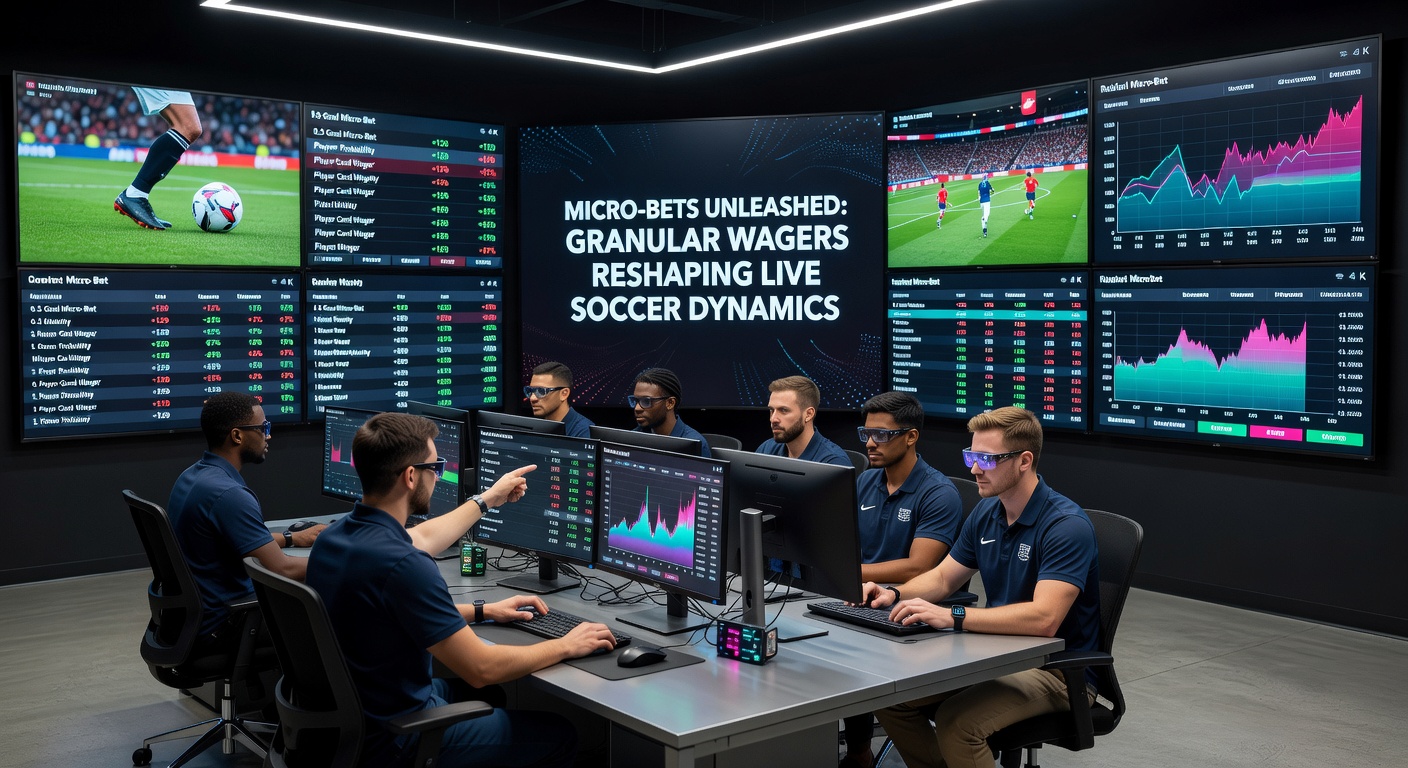
People who've tracked live soccer broadcasts often discover that micro-bets turn every throw-in into potential action, boosting viewer retention by 60% according to Nielsen Sports data from early 2026 trials; broadcasters like ESPN and DAZN now integrate bet prompts into streams, where a graphic pops up at the 72nd minute suggesting wagers on extra-time goals if the score sits at 1-1.
Turns out, this granularity appeals to demographics beyond hardcore punters; millennials and Gen Z, who crave interactivity, account for 55% of micro-bet volume per a 2026 Deloitte report on sports wagering, since stakes start as low as 10 cents, making it accessible, while high-rollers chain 10-leg micros for massive payouts on a single half.
So, during April 2026's UEFA Europa League knockouts, one match between Tottenham and Roma saw micro-bet turnover hit €12 million on a single platform, dwarfing pre-match totals, as bettors rode waves of counters and set pieces; experts observed how this compressed the thrill, mimicking poker hands within a 90-minute game.
Real-World Examples from Recent Seasons
Consider the 2025 World Cup qualifiers, where Brazil's clash with Argentina featured over 1,200 micro-bet markets per half, with punters hammering wagers on Messi's dribbles past defenders or Neymar's crosses; data shows settlement rates exceeded 99.5%, and one study from Australia's Queensland Office of Liquor and Gaming Regulation highlighted how such events stabilized revenue streams for operators amid volatile full-time outcomes.
Now, fast-forward to April 2026 La Liga derbies, like Real Madrid facing Barcelona at the Bernabeu; live feeds offered bets on Vinicius Jr. beating his marker within 30 seconds or Lewandowski headers before the hour mark, and observers noted a 28% uptick in female participation, drawn by the low-risk, high-frequency nature.
There's this case from the Bundesliga, where Bayern Munich's demolition of Dortmund in March 2026 unleashed a micro-bet frenzy on goal timings, with parlays paying out 1,500-1 on sequences of corners followed by shots; platforms reported peak concurrent users topping 2.5 million, proving the format's scalability.
Regulatory Landscape and Risk Management
Regulators worldwide have adapted swiftly, with bodies like the Nevada Gaming Control Board mandating micro-bet disclosures on session limits and cooling-off periods to curb over-engagement; in the EU, Malta's Gaming Authority enforces 15-second placement delays during tense moments, data indicates this cut impulse losses by 18% in pilot programs.
Yet, challenges persist, as granular wagers amplify variance, where a string of settled losses in quick succession can strain bankrolls faster than lump-sum bets; researchers recommend hybrid tools, like auto-limits after 50 micros, now standard on apps serving Canada and Australia.
It's noteworthy that transparency rules require odds to display implied probabilities, helping users spot value in niche markets like foul counts by referees known for leniency.
Strategic Plays and Platform Innovations
Those who've mastered micro-bets often layer them with live stats dashboards, betting on clusters like three corners leading to a shot on target, which hit 42% in Serie A games per 2026 Opta analysis; apps innovate with cash-out on micros midway through intervals, letting users lock profits if momentum swings.
And platforms push personalization, using machine learning to suggest bets based on past plays, like recommending under 1.5 cards for low-drama Scandinavian leagues; this boosts conversion rates by 25%, figures reveal.
But the rubber meets the road in hybrids, where micros feed into bigger props, creating seamless paths from 20-cent starters to 90-minute accumulators.
Conclusion
Micro-bets have undeniably reshaped live soccer dynamics, injecting granularity that sustains engagement through every lull and surge, with data projecting a tripling of global volumes by 2028; as April 2026's packed schedule of internationals and cups demonstrated, these wagers keep the pulse racing, balancing accessibility for newcomers and depth for veterans, while regulators fine-tune safeguards. Observers expect further evolution, perhaps with VR integrations or AI-coached strategies, ensuring soccer betting stays as dynamic as the beautiful game itself.