19 Jul 2026
Timezone Patterns Influencing Tournament Participation Rates in Mobile Poker Environments
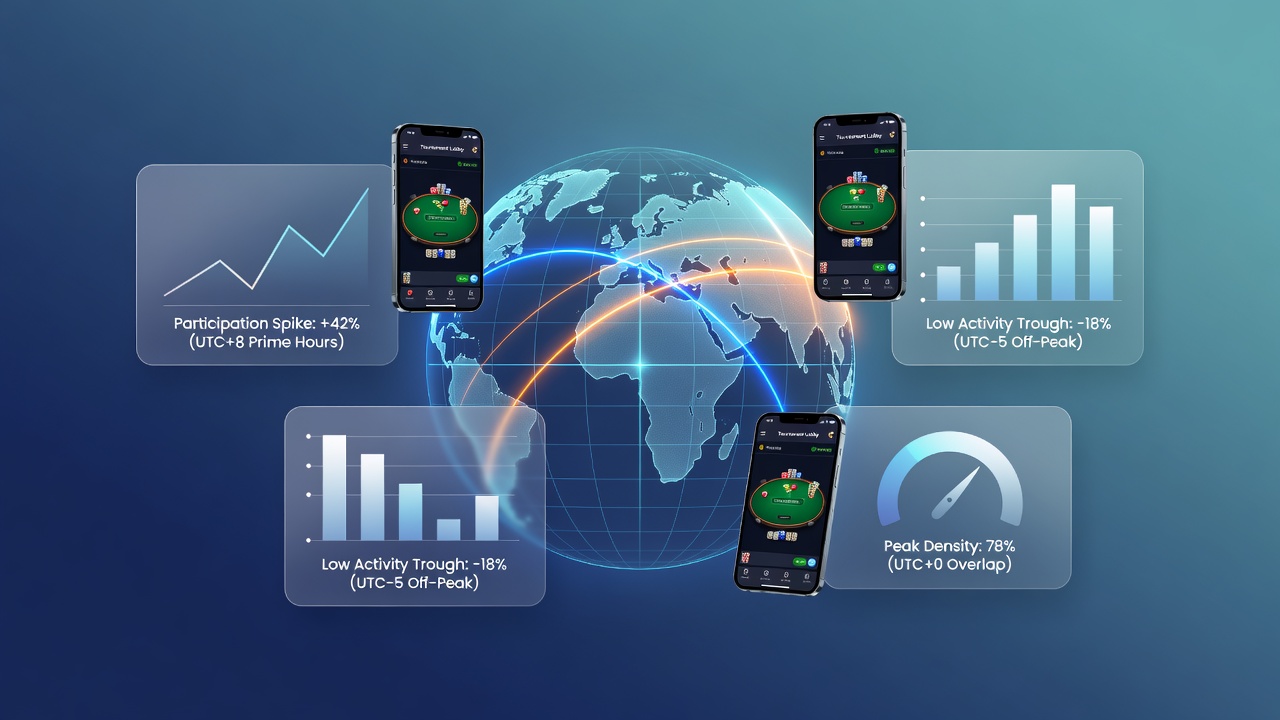
Data from multiple mobile poker platforms shows that timezone alignments create distinct participation spikes and troughs throughout any given day, and these patterns have become more pronounced as global player bases expand. Observers tracking user activity logs note that tournaments scheduled to coincide with evening hours in major population centers attract larger fields, while those falling during typical sleep periods in the same regions see reduced entry numbers. Researchers compiling hourly registration metrics across North America, Europe, and Asia-Pacific markets have documented how a single event time can draw thousands from one continent yet only hundreds from another simply because of clock differences.
Mapping Global Overlaps and Player Availability
Time differences between key markets produce overlapping windows where players from multiple regions remain active simultaneously, and this overlap drives higher registration volumes during those intervals. For instance, late afternoon in the eastern United States aligns with late evening in western Europe, creating a period when both American and European users log in at elevated rates. Platforms that adjust start times to capture these overlaps record measurable increases in field sizes, according to aggregated server data released by several operators. Yet when events fall outside these windows, participation drops even among dedicated player segments, because local clocks place the tournament during work hours or overnight rest periods.
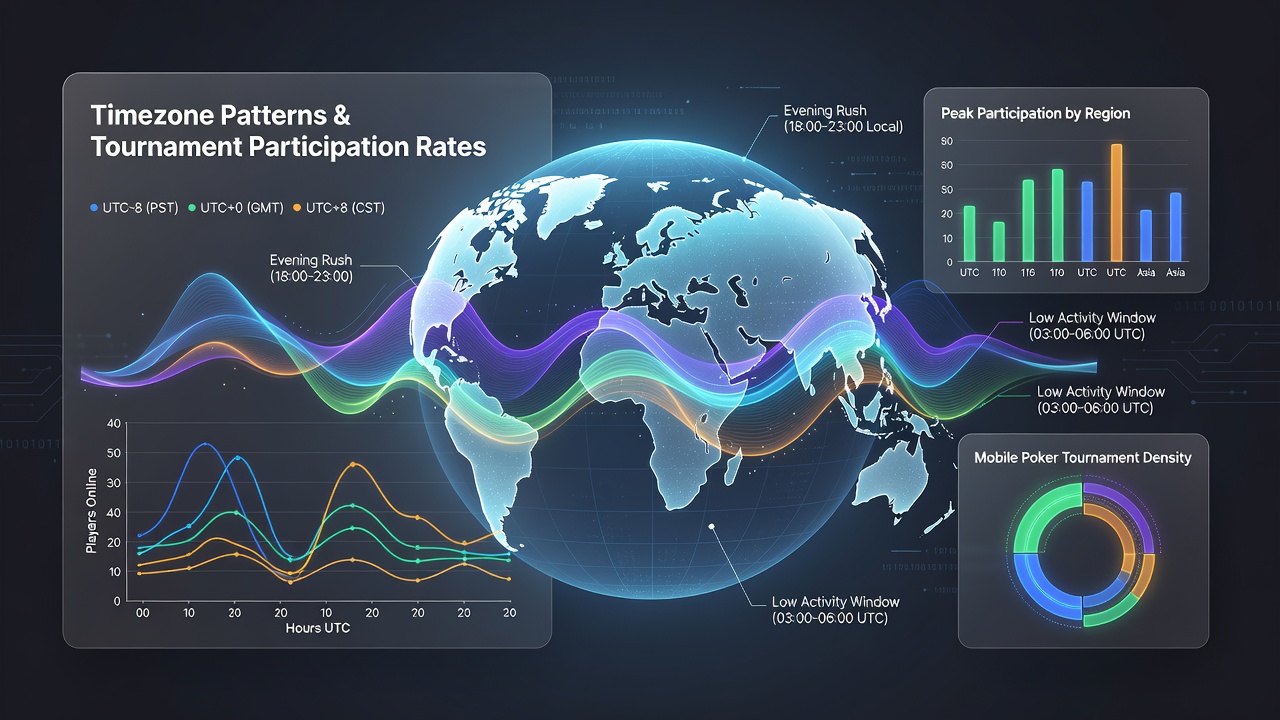
Analysts examining datasets from 2024 through mid-2026 identified recurring cycles tied to daylight saving transitions and standard workweek rhythms, and these cycles affect how many users join daily guaranteed prize events versus weekly majors. In July 2026, several large operators reported that tournaments starting between 18:00 and 22:00 UTC consistently pulled participants from at least four major timezone clusters, while events outside that band drew primarily from one or two clusters. The resulting variation in field sizes influences prize pool guarantees and satellite qualification paths, because operators scale structures based on expected turnout derived from historical timezone-adjusted numbers.
Regional Participation Trends and Platform Adjustments
North American players show strongest engagement during local evening hours, whereas European users peak later relative to UTC, and Asia-Pacific markets follow their own evening windows that sometimes fall during North American daytime. These staggered peaks mean that a tournament fixed at 20:00 UTC might capture peak traffic from the Americas and parts of Europe simultaneously, while the same start time leaves East Asian users logging in during morning commutes or work shifts. Mobile operators have responded by introducing rotating schedules and region-specific qualifiers that shift start times across weeks, allowing different timezone cohorts fairer access without fragmenting overall liquidity.
Studies conducted by the University of Nevada's International Gaming Institute have tracked these regional shifts using anonymized login timestamps, and the findings indicate that platforms offering flexible start times retain higher monthly active user counts than those maintaining rigid global schedules. American Gaming Association reports further document how operators leverage timezone analytics to balance daily tournament calendars, reducing the concentration of events during single regional peaks. Such adjustments appear in the form of staggered satellites and multi-flight events that spread participation opportunities across several hours, accommodating users whose local clocks would otherwise exclude them from main events.
Impact on Mobile-Specific Behaviors and Retention Metrics
Mobile environments amplify timezone effects because users often play in short sessions during commutes or breaks, and these micro-sessions cluster around local evening hours when connectivity and leisure time align. Push notification systems that account for recipient timezones demonstrate higher open rates and subsequent tournament entries compared with blanket global sends, according to internal metrics shared by several app developers. Retention data collected over multi-month periods reveals that players who repeatedly miss events due to timezone misalignment show elevated churn rates, prompting operators to deploy personalized scheduling tools that recommend events based on individual login histories and geographic indicators.
Cross-platform synchronization between mobile apps and desktop clients has also evolved to reflect timezone realities, with unified leaderboards now displaying start times converted automatically to each user's device settings. This technical adaptation reduces friction for participants who switch devices, yet it does not eliminate the underlying participation variance driven by biological and social schedules tied to local clocks. In markets where mobile data usage peaks during certain hours, operators further calibrate tournament frequency to match observed connectivity patterns, ensuring events launch when the largest possible segment of the target timezone cohort can actually connect.
Conclusion
Timezone patterns continue to shape mobile poker tournament participation through predictable overlaps and regional constraints that operators address via data-driven scheduling. Continued monitoring of these dynamics, supported by academic and industry analyses such as those from the University of Nevada and the American Gaming Association, enables platforms to refine calendars that better serve dispersed global audiences. As mobile infrastructure expands into additional markets, the same principles of alignment between event timing and local player availability remain central to maintaining consistent field sizes and engagement levels across all regions.